Shamley Green Duck Pond: Spillway Update
New spillway now installed at Shamley Green Duck Pond; next steps being discussed
Published: 15 August 2026
Our parish officially moved into drought status on 29 July 2026 and, if you find weather and water statistics interesting, the gov.uk website is issuing weekly reports on dry weather and drought in England here: Dry weather and drought in England 2026: summary reports – GOV.UK
The Council are concerned about the impact these increasingly common, dry, hot spells have on our amenities, including our wildlife habitats. They were pleased to recently approve plans for a wildlife pond at Barnett Hill Fields and you can find our latest update on other projects in the field on the news section of this website. However, as you may also be aware from our previous Shamley Green pond article or attending our public meetings, we have been exploring how periods of drought affect the two ponds we manage in Shamley Green. Our focus has been particularly on what steps we can take to reduce any negative impacts on wildlife, and thus we have been most concerned with the ‘duck’ pond by Woodhill Lane. This is more prone to drying out completely than the wildlife pond opposite the Bricklayers Arms.
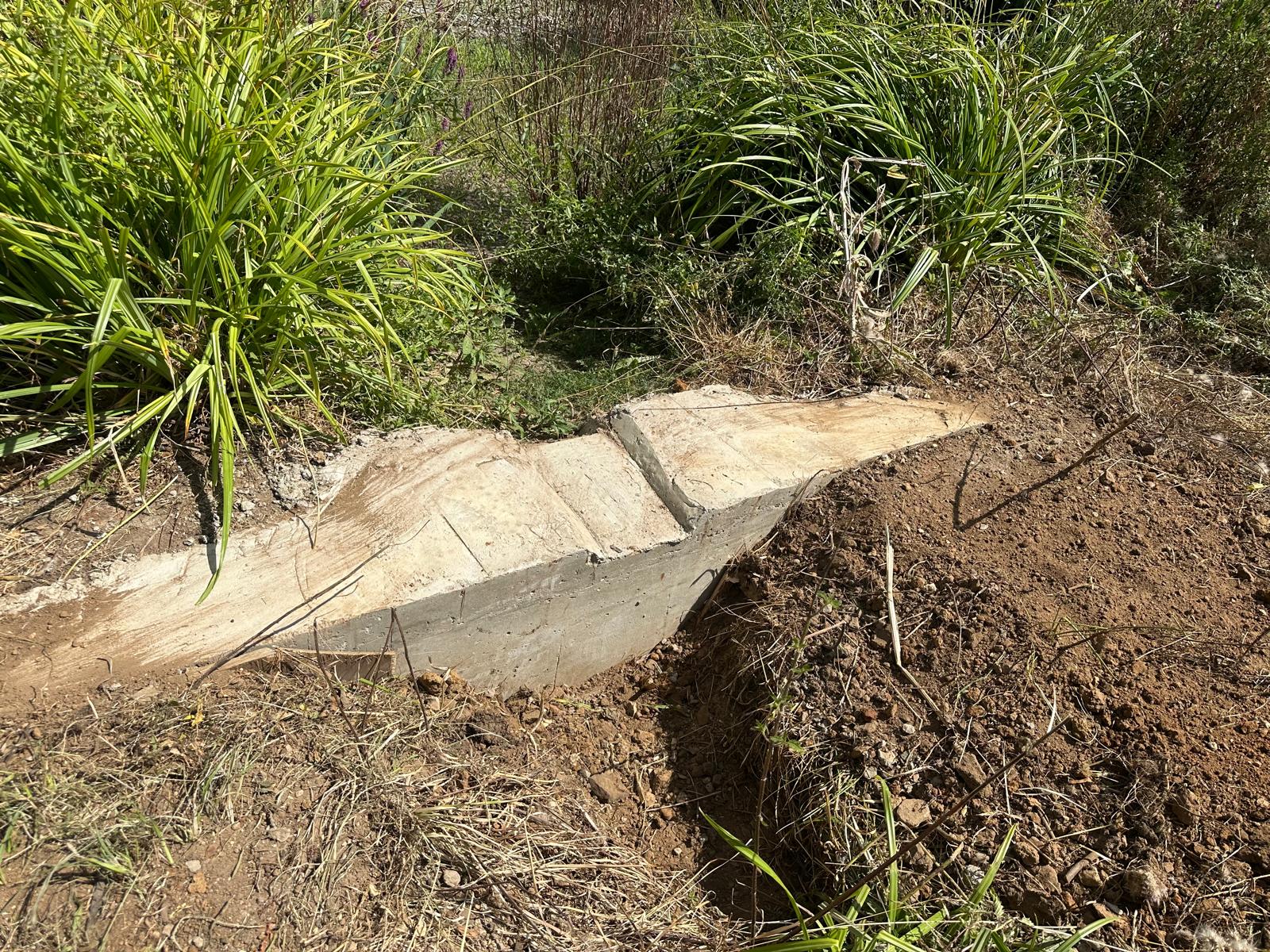
You may have seen our contractors hard at work recently, installing a new concrete spillway in the ditch that runs out of the pond towards the village. The spillway here prevents water from flowing out via the ditch and is very important for keeping water levels high in early spring, which means that when dry weather hits it takes longer for the pond to dry out. The old spillway had been suffering a series of leaks and was no longer fit for purpose. We are very grateful to our contractors for working in the blistering heat to build the new spillway, which is better engineered, including with steel rods to reinforce it. The new spillway is also a few centimetres higher than the old one, to increase water levels further.
The Commons Working Party are meeting this month to discuss next steps. One task is to build a second silt trap where the water runs in from the corner of Woodhill Lane. The first silt trap we built (which runs in from the eastern corner of the pond) has been effective at reducing the amount of new silt being introduced to the pond, with our contractors removing any trapped silt regularly. The second silt trap will perform the same job. Silt levels are one of the key topics in our discussions. There are many benefits of a modest layer of natural pond silt, including providing habitats and hibernation sites for wildlife, forming a base for roots for aquatic plant, and protecting the clay pond lining underneath. However, continuous silt build up makes the pond much shallower over time, increasing the risk of the pond drying out, and also has an impact on water quality. We have permission from the pond’s landowner, Waverley Borough Council, to perform silt removal in the winter months.
Our last ecologist’s survey of the pond was in 2020 and this is now due an update, particularly to re-establish the pond’s habitat scores for Great Crested Newts, which are a protected species. This is something we will be considering at future meetings of the Council. The public are always welcome to attend our meetings, with dates published well in advance on our website and agendas provided at least three clear working days before each meeting. You can also join our mailing list for regular updates via email.